Building a guide-training program from nothing
The software gets the attention, but the harder build was the team. When I started, there was no training program. New guides learned by watching, and a trip's quality depended on which guide you happened to draw.
- 100+ guides through the program
- 50+ whitewater case studies in the curriculum
- 300+ applications a season, for a handful of spots
In a business that runs on young, seasonal, safety-critical labor, inconsistency is the thing that caps you. A great product on great water still falls apart if every guide makes different decisions under pressure, often miles from any contact. So I built the program, from nothing.
What it is
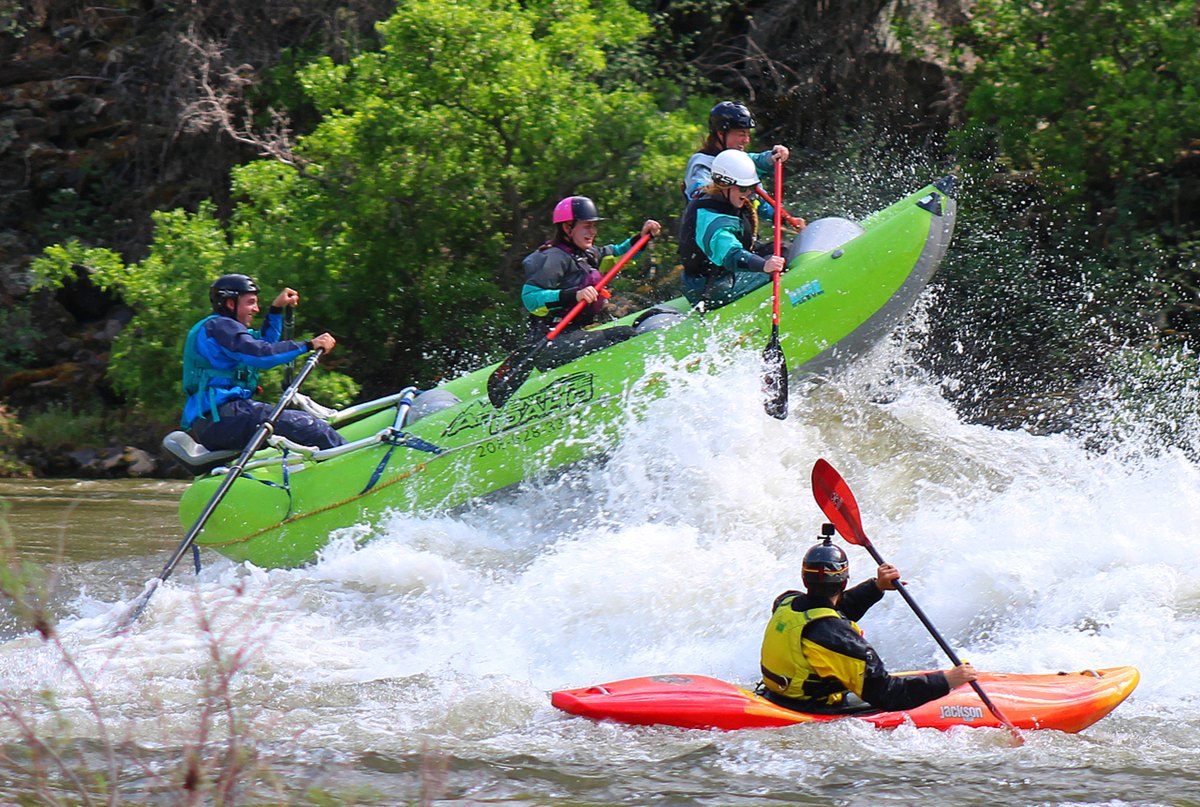
It starts with an intensive multi-week bootcamp before each season, built on International Rafting Federation standards combined with field-tested methods. Guides run live scenarios, not lectures: swimmer rescues, rope systems, boat flips, medical evacuations, and risk-response simulations. They swim real rapids, because confidence and judgment under pressure can't be taught from shore. They cross-train across high-volume water, technical low water, and rescue, so a guide isn't only competent on the one run they're comfortable with.
Underneath the bootcamp is a written curriculum I authored: 50+ real whitewater case studies, drawn from accident reports, other companies' hard lessons, and firsthand experience, organized across driving and shuttle safety, river safety, low water, leadership, and operations. Each one puts a guide inside a real decision: a foot entrapment, a wrapped boat, a strainer, a cold-water swim, a guest crisis, and asks what they would do and why. New guides don't just learn the moves. They rehearse the judgment.
Lead guides get an additional track on leadership and per-river standard operating procedures.
The debrief culture
The part that actually holds it together isn't a document, it's the debrief culture, and I didn't invent it. Two of the people I have worked for are former US Air Force fighter pilots, and they taught me how a real debrief runs: honest, humble, analytical, and unsparing, with the rank left at the door. They also taught me that it is a business practice, not a military one. An organization only compounds if it can look straight at what went wrong.
So every hard situation gets broken down for what worked and what gets better next time, without ego and without blame, because the point is the next trip rather than the last one. That is what turns a roster of individuals into a team that makes the same decisions under pressure, and it's the engine behind the operational excellence the rest of the business depends on.
Staffing stopped being the constraint
The first season I could barely find enough people to put on the water. Riggins is not a place anyone commutes to, and the default in this industry is to compete for the same small pool of already-certified guides and then lose them at the end of the season.
Now the program draws 300+ applications a season for a handful of spots, and retention climbed with it: guides come back year over year instead of churning out after one. That compounds in a way nothing else in the operation does. A returning guide is already trained, already knows the water, and already carries the standard, so every season starts further ahead than the last one did.
What the training made possible
Once the program could reliably produce guides who make good decisions in serious water, the company could do something it couldn't before: run harder rivers. I worked with the owners to launch an advanced-whitewater section on the Murtaugh, Class IV+ water most of the roster couldn't have been staffed for two seasons earlier. It became a new product line at a premium, aimed at experienced guests, and it exists only because the training pipeline could put qualified, drilled guides on it safely. A training program usually gets treated as a cost. Built right, it opens revenue that stays off-limits until the people are ready for it.
Why it matters
The proof is the number that's hardest to fake: a 5.0-star reputation across 650 reviews, held steady while the company grew roughly 3.6x. Reputation at that scale is not marketing. It's what happens when a guest's experience is the same whether their guide is in their first season or their fifth. That consistency is the training.
The reason this transfers past rafting is simple. The hardest part of scaling any service business is not the systems or the software. It's making the people consistent. Software scales what a business knows. Training and a real debrief culture scale what its people can actually do under pressure. I've now built both, in the same company, at the same time.